How to Wash Graphic Tees So Prints Last Longer

Table of Contents
- Why Graphic Tees Need Different Care Than Plain Shirts
- Can You Put Graphic Tees in the Washing Machine?
- Step-by-Step: How to Wash Graphic Tees Without Ruining Them
- The Best Water Temperature for Graphic Tees
- How to Dry Graphic Tees Without Shrinking Them
- How to Prevent Graphic Tee Prints From Peeling and Cracking
- Stain Removal, Water Hardness, and Storage Tips Riders Miss
- Frequently Asked Questions
Last Updated: October 7, 2026
Why Graphic Tees Need Different Care Than Plain Shirts
A graphic tee is a printed garment first and a shirt second.

Printed tees have a second material bonded to the surface, and that bond is the weak point.
Most guides treat every graphic tee the same, but screen prints, DTG prints, and heat transfers fail differently.
Below, we break down how to sort, wash, dry, and store printed tees, plus two things almost nobody checks: water hardness and storage setup.
Can You Put Graphic Tees in the Washing Machine?
Yes, for most shirts a cold machine wash is perfectly safe. Damage comes from heat and friction, not the machine.
Follow these rules and the print holds up:
- Turn the shirt inside out before it goes in
- Use cold water, never hot
- Pick a gentle or delicate cycle
- Skip fabric softener entirely
- Wash with similar colors and weights only
Skip the dryer if you can, that single change does more for print life than any detergent.
When Hand Washing Makes More Sense
Hand washing wins in three cases: a shirt you can't replace, a print already cracking, and any tee with heavy vinyl or a thick heat transfer.
Fill a basin with cold water and a capful of mild detergent. Submerge the shirt, press it down a few times, and let it sit 10 to 15 minutes.
For everything else, the machine is fine. Hand washing is insurance, not a requirement.
Step-by-Step: How to Wash Graphic Tees Without Ruining Them
The full process takes about five minutes of hands-on work.
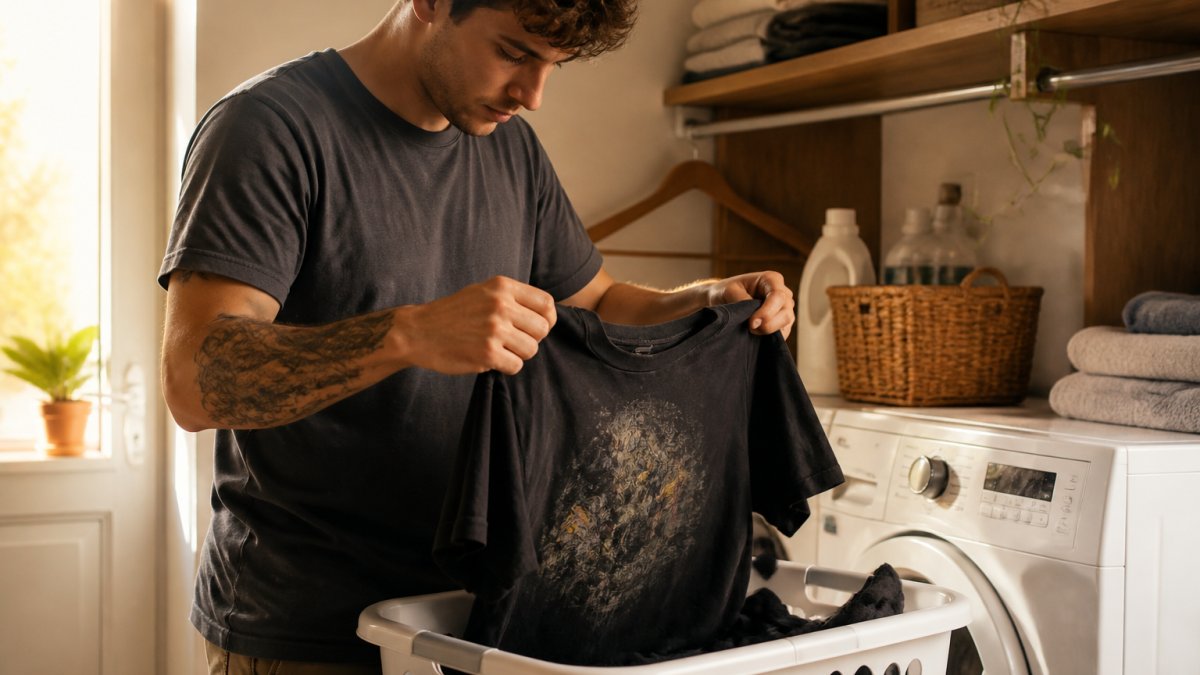
- Turn the shirt inside out. This puts the fabric between the print and everything else in the drum.
- Check the care label. Follow it over anything in this guide.
- Sort by color and weight. Lights with lights, darks with darks, heavy cotton away from thin knits.
- Add a small amount of mild detergent. More soap does not mean cleaner clothes.
- Choose cold water and a delicate cycle. Cold protects the print. Delicate protects the seams.
- Skip fabric softener and dryer sheets. Both coat the fibers and weaken print adhesion.
- Wash a full load, not a packed one. Overloading causes the agitation that cracks prints.
- Remove the shirt immediately. Sitting wet in the drum invites color bleeding and creases.
A graphic tee doesn't need washing after every wear. If it's not sweaty or stained, air it out and wear it again, fewer cycles means less wear on the print.
Sorting by Color and Fabric Weight
Sorting is the step most people skip, and it causes the most damage.
New dark shirts bleed dye onto lighter garments in the same load, and it's nearly impossible to reverse. Keep darks separate for at least the first few washes.
Weight matters too: heavy cotton against thin synthetics creates friction, and friction peels vinyl. Group similar fabrics together.
- Darks and blacks together
- Lights and whites together
- Heavy cotton tees separate from thin blends
- Anything with a print away from zippers, hooks, and hardware
Detergent Choices and Why Fabric Softener Hurts Prints
Use a mild, liquid detergent with no added bleach or brighteners. Powder detergents can leave residue that dulls a print.
Fabric softener is the bigger problem. It coats fibers with a waxy film that sits between the ink and the fabric and slowly breaks the bond.
Dryer sheets do the same thing later in the process. Skip both.
The Best Water Temperature for Graphic Tees
Cold water is best for graphic tees, ideally 30°C (90°F) or lower.

Warm water is a gamble: it might not ruin a shirt in one wash, but it speeds up fading, cracking, and shrinking.
The care labels on our own C.A.B.
Cold water also protects color: dye stays put, which matters for both the shirt and the print on top of it.
How to Dry Graphic Tees Without Shrinking Them
The safest way to dry graphic tees without shrinking them is to air dry, lay the shirt flat or hang it away from direct sun.
Heat shrinks cotton and cracks prints; air drying removes both risks at once.
If you must use a machine:
- Set it to tumble dry low
- Remove the shirt while it's still slightly damp
- Never use high heat, even for a few minutes
- Avoid dryer sheets
Tumble Dry Low vs. Line Dry
Line drying is better for anything with a print: no heat, no friction, no cost.
Tumble dry low is the compromise: it works, but every cycle adds wear to the print. If you're rotating shirts you care about, air dry them.
One practical tip: hang shirts by the shoulders or lay them flat. Hanging a wet tee by the collar stretches the neckline.
How to Prevent Graphic Tee Prints From Peeling and Cracking
You prevent graphic tee prints from peeling and cracking by controlling heat, friction, and chemicals across the entire wash and dry cycle. The exact combination depends on how your graphic was made: a screen print, a DTG print, a heat transfer vinyl (HTV) decal, and an embroidered logo each fail differently.
Here's how each print type fails and what to do about it.
Screen Print
Screen printing pushes thick plastisol ink through a mesh screen onto the fabric, where it sits in a flexible layer. It fails by cracking along the thickest areas, chest, shoulders, sides, where the shirt flexes most. Heat makes the ink brittle, and friction creates micro-cracks that grow.
Prevention: Wash inside out on cold, use a gentle cycle, and air dry. Avoid stretching the shirt when you put it on or take it off.
DTG (Direct-to-Garment)
DTG printing uses water-based inks that soak into the cotton fibers. It fails by fading gradually, not peeling.
Prevention: Cold wash with a mild liquid detergent, no bleach or brighteners. Skip fabric softener and dryer sheets entirely. Air dry or tumble dry low. DTG is more forgiving of folding and stacking than HTV, but it still rewards gentle handling.
Heat Transfer Vinyl (HTV)
HTV is a polyurethane film heat-pressed onto the fabric as a solid layer. It peels at the edges first, then lifts across the design. Heat, friction, and fabric softener weaken the adhesive; hot water or high dryer heat curls the vinyl, and overloading the washer makes it catch on zippers or buttons.
Prevention: Cold wash, inside out, on a delicate cycle. No fabric softener or dryer sheets. Air dry only; even low heat in the dryer can shorten the life of the adhesive.
Embroidery
Embroidery uses thread stitched through the fabric. It fails by snagging, pilling, or breaking, and rough agitation damages it. Zippers, hooks, and Velcro are the main enemies.
Prevention: Wash inside out on a gentle cycle with similar fabrics. Avoid washing with items that have exposed hardware. Air dry or tumble dry low. Do not iron directly over the embroidery; use a pressing cloth and low heat.
The Universal Rules (Apply to All Print Types)
Regardless of print method, these steps prevent most damage:
- Turn the shirt inside out before washing.
- Use cold water (30°C / 90°F or lower).
- Choose a gentle or delicate cycle.
- Use a mild liquid detergent with no bleach or brighteners.
- Skip fabric softener and dryer sheets.
- Wash a full load, not a packed one, to reduce friction.
- Remove the shirt immediately after the wash.
- Air dry whenever possible; if using a dryer, tumble dry low and remove while slightly damp.
- Never iron directly over the print.
If a print is peeling at the edges, you can sometimes press it back down with a low-heat iron and a cloth between the iron and the design. It won't restore a badly damaged print, but it buys time on a small lift. For faded DTG prints, there is no reliable home fix; prevention is the only cure.
Stain Removal, Water Hardness, and Storage Tips Riders Miss
Three things separate a shirt that lasts two years from one that lasts ten: how you treat stains, what's in your water, and where the shirt lives. Most guides stop at the wash cycle, but these details extend print life.
Stain Removal Without Lifting the Print
Blot, don't rub, rubbing pushes the stain into the fibers and can lift the print.
For grease, apply a drop or two of dish soap, work it in gently, and let it sit 10 minutes before washing.
Never use chlorine bleach on a graphic tee. It will fade the print and weaken the fabric. Oxygen-based bleach (like OxiClean) is safer for colorfast shirts, but still test first.
Water Hardness: The Invisible Print Killer
Hard water contains dissolved calcium and magnesium. Those minerals leave deposits that dull colors and fade prints, and they reduce detergent effectiveness, so you use more, leaving residue that dulls the print further.
If you have hard water (you can check with a cheap test strip or your local water report), consider these steps:
- Use a water softener if your home has one.
- Choose a detergent formulated for hard water, or add a water-conditioning booster like Calgon.
- Run a monthly cleaning cycle on your washing machine with a washing machine cleaner to remove mineral buildup.
- For hand washing, use distilled water if your water is extremely hard.
Shirts washed in hard water without conditioning look noticeably older after a year than the same shirts washed in soft water. It's cumulative, not a single wash.
Storage and Folding: Where Prints Go to Die
How you store a graphic tee matters as much as how you wash it. Avoid pressure, moisture, and sunlight.
Fold, don't hang. Wire hangers stretch the shoulders and distort the print.
Avoid heavy stacks. Weight presses the print into the fabric below and cracks the ink along fold lines.
Keep it dry. Damp fabric plus folded print equals cracked ink.
Away from sunlight. Direct sunlight fades both the fabric dye and the print.
Frequently Asked Questions
Should you wash graphic tees inside out?
Yes, turning graphic tees inside out before washing is one of the simplest ways to protect the print. The inside-out method keeps the graphic from rubbing against other garments, zippers, and the drum of the washing machine. This friction is what causes cracking, peeling, and fading over time. Flip the shirt inside out, fasten any buttons or zippers on other items, and wash on a cold, delicate cycle. Your prints will hold up far longer with this one habit.
What water temperature is best for washing graphic tees?
Cold water is the best choice for graphic tees. Heat breaks down the adhesives and inks used in most print methods, which leads to cracking and peeling. Cold water (max 30°C or 90°F) cleans effectively while keeping the print intact. Check the care label on your shirt, since brands like C.A.B. Racing specify cold machine washing for their garment-dyed cotton tees. When in doubt, always go colder rather than hotter.
How do you stop a graphic tee print from cracking or peeling?
Prevention starts before the first wash. Turn the shirt inside out, use cold water, skip fabric softener, and tumble dry on low heat or air dry. Fabric softener coats the print and weakens the bond between ink and fabric. Also avoid ironing directly on the graphic, and never bleach a printed shirt. If a print already shows minor cracking, you can slow the damage by switching to hand washing and laying flat to dry from that point on.
How often should you wash a graphic tee?
Wash graphic tees only when they actually need it. Every wash cycle exposes the print to agitation, heat, and detergent, all of which wear down the graphic over time. For casual wear, two to three wears between washes is usually fine if you air the shirt out and hang it after wearing. For BMX riding where sweat is heavy, wash after each ride, but use a cold, gentle cycle to limit print stress.


